

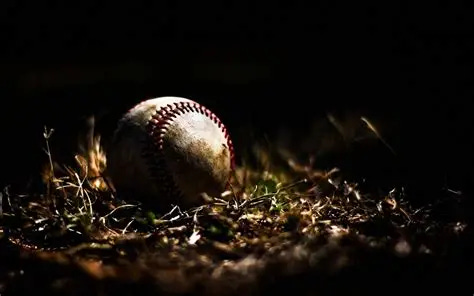
I can still name all the big players on the New York Mets in 1986, the year they won the World Series: Keith Hernandez, Wally Backman, Howard Johnson, Rafael Santana, Lenny Dykstra, Darryl Strawberry, Mookie Wilson, Dave Magadan, Gary Carter, Dwight Gooden, Ron Darling, Sid Fernandez. It was the same year we moved back to New York, the year my grandfather was diagnosed, the year before I stopped watching baseball.
Growing up, we spent almost every Saturday afternoon in the back of my grandfather’s drug store in Sunnyside, Queens. The radio was always tuned to elevator music or a ballgame, while my sister and I kept busy with coloring books and cookies from the Italian bakery next door. My mother helped count and sort pills, placing them in orange plastic containers for customers to pick up.
Sometimes my sister and I got to help out too, stacking cigarette cartons on the shelves behind the counter—Marlboros, Salems, Newports, Lucky Strikes—sweeping the front of the store, or straightening up the candy section—Chuckles, KitKats, Chunky Bars, York Peppermint Patties—by the cash register.
When I was bored, I’d write stories and show them to my grandfather. He would take out a pen from the pocket of his white pharmacist’s shirt to correct my spelling and show me how I could say the same thing in fewer words. My grandfather himself was a man of few words who never spoke about his own life—about the sixteen gunpoint robberies, about the framed photo of his older son Michael on top of his dresser, about his monthly visits to a place called Creedmoor where his younger son Peter had lived since he was thirteen.
I only knew my grandfather in the quiet, tender moments, separate from tragedy and uncertainty. In the evenings, I’d sit on his lap in a well-worn armchair while he watched TV and smoked his pipe and cigars, letting me take a drag or two. It was in these moments that I fell in love with many things: the scent of tobacco on a man’s shirt, the stubble from his chin on my forehead, and the crack of the bat.
Baseball, with its nine unpredictable chapters, was a story told between the lines: the secret nods and hand gestures, the angle of a curve that determined everything, the intuition to bunt or swing, to run or to stay on base. The intimate trust among the players felt safe to me, and the comfort of my grandfather’s presence made that safety real.
Watching the game, we had our own secret, Morse-code language. He would squeeze my hand silently, asking:
“Do you love me?” (four squeezes)
I would answer: “Yes I do” (three squeezes back)
“How much?” he’d ask (two squeezes)
And then, with all the strength I could muster, I would squeeze as hard as I could, trying to impress him and at the same time show him just how much I adored him.
After he died, I never talked about him to anyone, letting parts of me disappear along with his memory. But now, nearly forty years later, as spring training approaches, I feel the lure of the game. I remember the delicate rule he taught me, that less is more, and the lesson I learned on my own, that loving someone with all your heart feels like sliding into home. It’s all still right here, in the palm of my hand.